

Rental is the base for sustainability.
Today we live in a world where we have more technology in our lives but also more life in our...

Creating a rental website is about more than simply having an online presence. Customers expect a seamless booking experience, real-time availability, and clear communication. At the same time, as a rental company, you want to remain in control of your operations and be ready to scale. This guide explains how to create a rental website that performs effectively today and is prepared for the future.
The way customers rent properties has changed dramatically in recent years. Where bookings were once handled by phone or email, customers now expect to browse, compare, and book online anytime, 24/7. As a result, a professional rental website is no longer a luxury, but a vital component of a successful rental business.
With a high-quality rental website, you are less reliant on external platforms and marketplaces. You control how your offerings are presented, how prices are set, and how the booking process works. Moreover, you build a direct relationship with your customers, instead of leaving valuable customer data in the hands of third parties.
Another major advantage is automation. A rental website integrated with rental management software significantly reduces manual work: availability is updated automatically, reservations are confirmed instantly, and payments are processed online. This saves time, minimizes errors, and frees you up to focus on growing your business.
Case study from our customer RentalTec
"We save maybe 10x as much time with RentMagic compared to working in Excel. That was an incredibly inefficient system, keeping track of all kinds of different tables."
- Arvid de Decker, IT Operations Advisor at RentalTec
In short, a professional rental website provides more visibility, more control and a more efficient rental process.
A rental website is more than an online business card. Whereas a regular company website mainly informs, a rental website is focused on interaction and transactions. Visitors can not only see what you are renting out, but also check directly whether something is available, place a reservation and often even pay online.
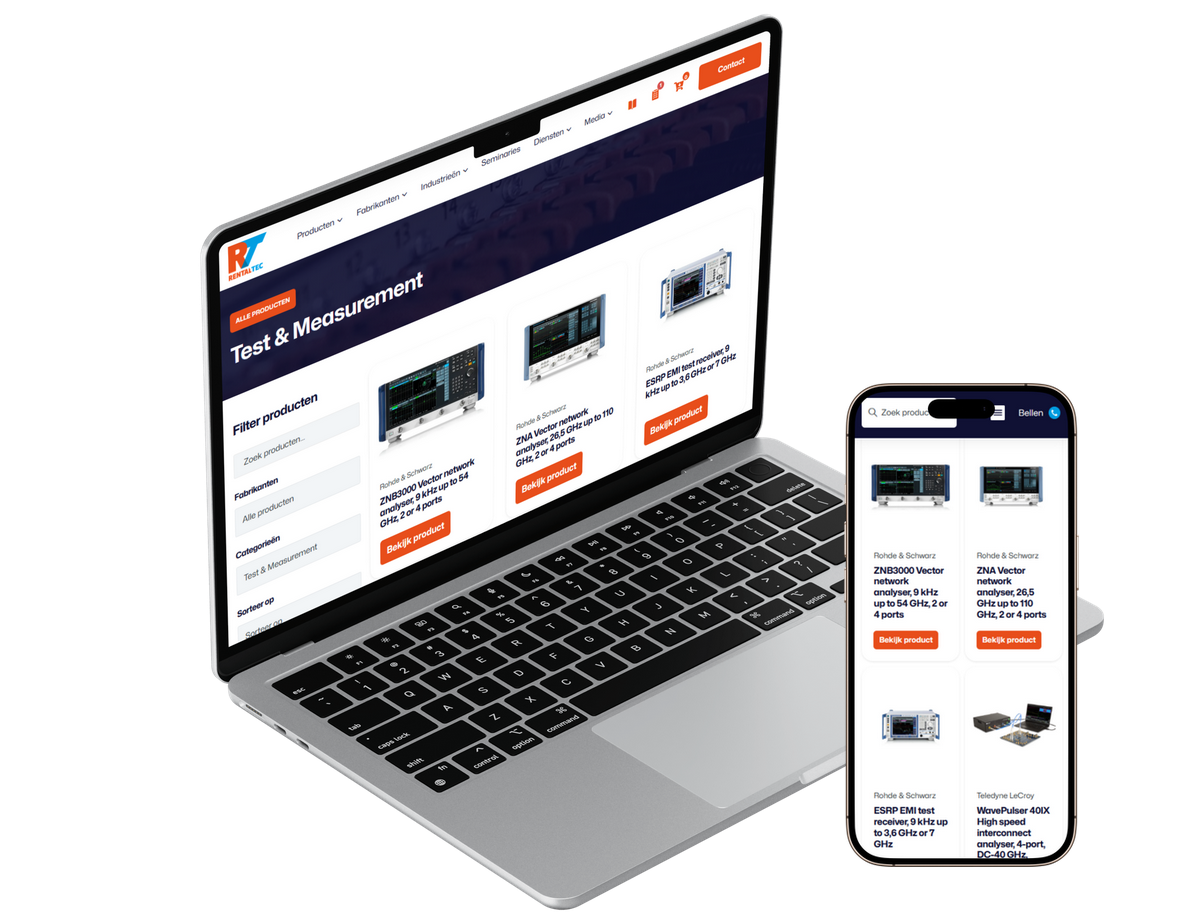
In practice, there are roughly three levels:
Which variant fits best depends on your type of rental and your ambitions. For a small supply, a simple solution may suffice, while growing rental companies are increasingly opting for an integrated approach.
There are several ways to create a rental website. Which option is most suitable depends on your budget, technical knowledge and growth plans. Broadly speaking, there are three approaches.
With customization, a web agency or developer builds the rental website completely from scratch. This gives maximum freedom because they tailor the design and functionality exactly to your needs.
This freedom is also offset by disadvantages. Customization is often expensive, takes a long time to develop and requires ongoing maintenance. Adjustments or new functionality usually mean additional development costs. For rental companies that want to get started quickly or make frequent changes, this is not always the most practical choice.
A common solution is to use a content management system such as WordPress, combined with rental or booking plugins. This allows you to set up a website with booking capabilities relatively quickly.
This approach offers flexibility, but it also comes with complexity. Plugins must be maintained, updates can cause conflicts and extensions often require additional configuration. As your rental process becomes more complex, it can be difficult to keep everything stable and organized.
With this approach, rental software forms the basis of your rental Web site. The website and reservation system are directly connected, so availability, prices and reservations are processed automatically.
The biggest advantage of this is speed and reliability. You can go live quickly, have fewer technical decisions to make, and work from one central system. For rental companies looking to automate and grow, this is often the most efficient solution.
Each approach has its place. The important thing is that the chosen solution fits how you work today as well as how you want to grow tomorrow.
A rental website can look great visually, but without the right functionalities, it accomplishes little. Successful rental websites are not built around design, but around the rental process. The features below are the foundation for this.
Visitors should be able to make a reservation easily and quickly. The more steps or ambiguities, the more likely a potential customer will drop out. A clear booking flow with clear choices and immediate confirmation is therefore essential.
Nothing is more frustrating than placing a reservation for a product that ultimately turns out to be unavailable. By showing real-time availability, you avoid double bookings and create immediate customer confidence.
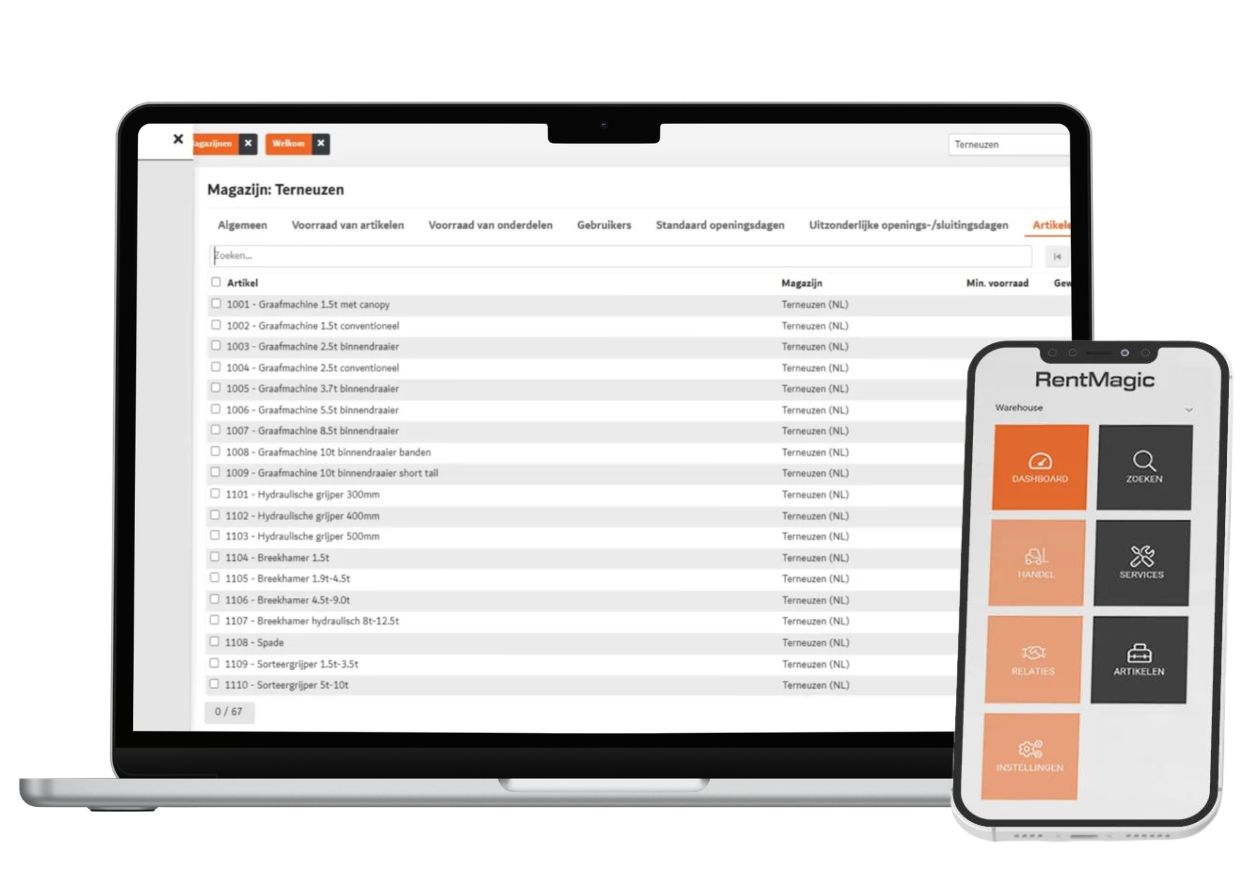
Many rental companies work with different rates: daily, weekend, weekly or seasonal. A good rental website supports this flexibility, without you having to keep track of everything manually.
Online payments are increasingly expected by customers. Think of down payments, full payments or reserving a security deposit. This speeds up the rental process and reduces the chance of no-shows.
All reservations and customer data should come together clearly in one place. This makes follow-up easier and provides insight into your rental performance.
Confirmations, reminders and practical information are fully automated. This saves time and ensures a professional image towards your customers.
Case study from our customer TSA Safety Services
"If you want to grow and you have the ambition, you have to have your rental administration in order. The last thing you want is to be surprised."
- Bennie de Looff, Business Controller at TSA Safety Services
Together, these features ensure that your rental website not only attracts visitors, but actually converts them into reservations.
Many rental websites have the same basic functionality, yet deliver very different results. The difference is rarely in what is technically possible, but rather in how simple and reliable the website feels to the visitor.
A successful rental website is immediately clear. Visitors understand without explanation what you rent out, how it works and what the next step is. Clear navigation, clear text and a logical booking process make visitors decide faster.
Renting requires trust. Customers want to be sure that they are dealing with a reliable party. A professional appearance, clear information about conditions and transparent prices contribute greatly to this.
Successful rental websites are designed with one main goal: to achieve reservations. This means that possible distractions on the site are limited and important actions, such as booking or contacting, are always clearly visible.
A large proportion of visitors view a rental website via mobile. If the website is slow or difficult to use on a smartphone, potential customers quickly drop out. Speed and mobile usability are therefore not extras, but preconditions.
By consciously applying these elements, you increase the chance that visitors not only look, but actually rent.
A rental website has little value if potential customers cannot find you. Search engines therefore play a major role in the success of online rentals. At the same time, SEO for rental websites works slightly differently than for many other types of websites.
People often search very specifically for what they want to rent, and where. Think of combinations of product, location and rental period. A good rental website matches this with clear pages per category, product or location.
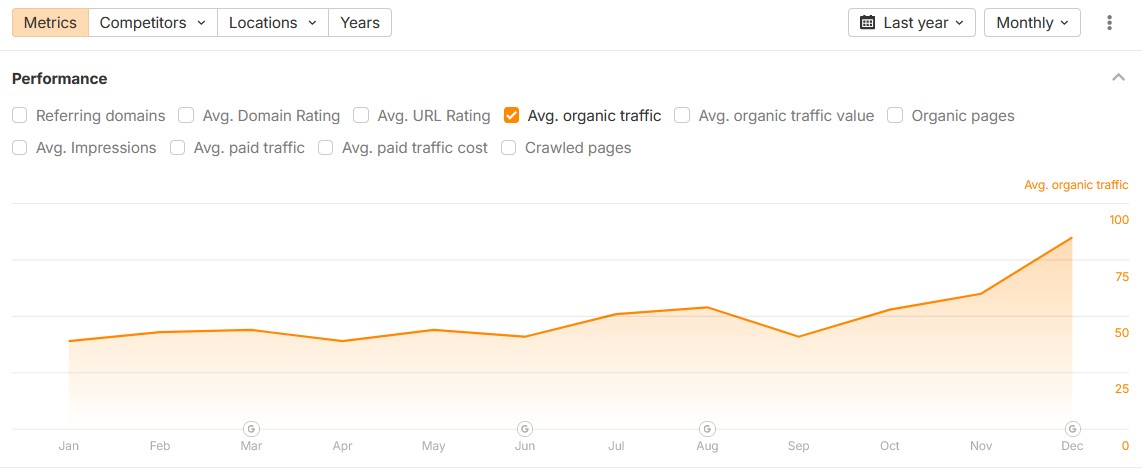
Search engines love overview. A logical website structure, with clear pages and consistent information, not only helps visitors but also your findability. When availability, prices and content are well structured, your website is better understood and indexed faster.
In addition to product pages, additional content is important. Think of explanations about the rental process, frequently asked questions and practical information. This content answers visitors' questions while increasing their confidence to make a reservation.
Speed, mobile usability and a stable technical base are essential for SEO. Rental websites with complex reservation processes need extra attention here, because technology directly affects both findability and user experience.
A well findable rental website thus combines content, structure and technology into one.
Many rental companies start small, but sooner or later face growth. More products, more reservations or multiple locations place different demands on a rental website than in the initial phase.
A scalable rental website grows with you without making processes more complicated. You keep an overview of availability, prices and reservations, even as your supply grows. That way, you prevent extra growth from automatically leading to more manual work.
When you work with multiple locations or a wide assortment, it is important that your website can display this logically. Visitors should quickly find what is relevant to them, while you keep a central overview.
As a rental business grows, so does the need for links. Think accounting, calendars or other business systems. A rental website that is technically prepared for this prevents limitations in the long run.
Case study from our customer Coolpinguin
"We were able to get started super fast. We did a lot of implementation work ourselves and the interaction with RentMagic feels like a fine collaboration. That way you keep each other on your toes and you can keep growing."
By taking scalability into account right from the start, you prevent your website from slowing down further growth.
When creating a rental website, we frequently see the same mistakes. These mistakes seem harmless at first, but can later cause extra costs, missed reservations or unnecessary manual work.
Many rental companies start with a simple website and only add automation later. This creates temporary solutions that end up being difficult to replace.
The more steps a customer has to go through, the more likely a reservation will not be completed. Unclear forms, hidden fees or mandatory contact moments lower conversion rates.
A rental website that is not aligned with the daily process creates duplication of effort. Information must be manually copied and errors are more likely to occur.
Without insight into reservations, occupancy and customer behavior, it is difficult to improve. A rental website should not only show what you rent out, but also provide insight into how your business is performing.
By avoiding these pitfalls, you lay a solid foundation for an efficient and future-proof rental website.
The cost of a rental website varies greatly from one approach to another. Therefore, the honest answer is: it depends on how professional, flexible and scalable you want to work. Still, there are clear guidelines.
Custom rental website
CMS + plugins (e.g. WordPress)
Rental website based on rental software
In addition to visible costs, time and errors play a major role. Manual work, corrections, misbookings or having to switch to a different system later create indirect costs that add up quickly.
So the real cost of a rental website is not only in what you pay for software or development, but mainly in the impact on your daily operations.
By looking not just at the price, but at the total picture, you will make a choice that will pay off the most in the long run.
Making a rental website is not about choosing the most features, but about making the right choices. A website that connects with your rental process, is easy for customers and grows with your ambitions is the basis for sustainable growth.
Our customers such as RentalTec, Coolpinguin and TSA Safety Services show that success lies primarily in automation, overview and flexibility. By thinking about scalability and ease of use from the start, you prevent your website from becoming a bottleneck later on.
Do you want a rental website that not only looks professional, but actually contributes to more efficient operations and growth? Then it makes sense to choose a solution that is specifically designed for rental and moves with your business.
Find out how specialized rental software helps you get started faster, do less manual work and stay in control of your rentals. Contact us for a free demo.
Stay sharp with our latest articles, written by and targetted for rental professionals like you. Here are some more recent posts:
Today we live in a world where we have more technology in our lives but also more life in our...
What kinds of containers are rented out, what are the challenges and how can rental software help...